
Selling in Toledo? See every seller closing cost in Lucas County for 2026, from the...
Read More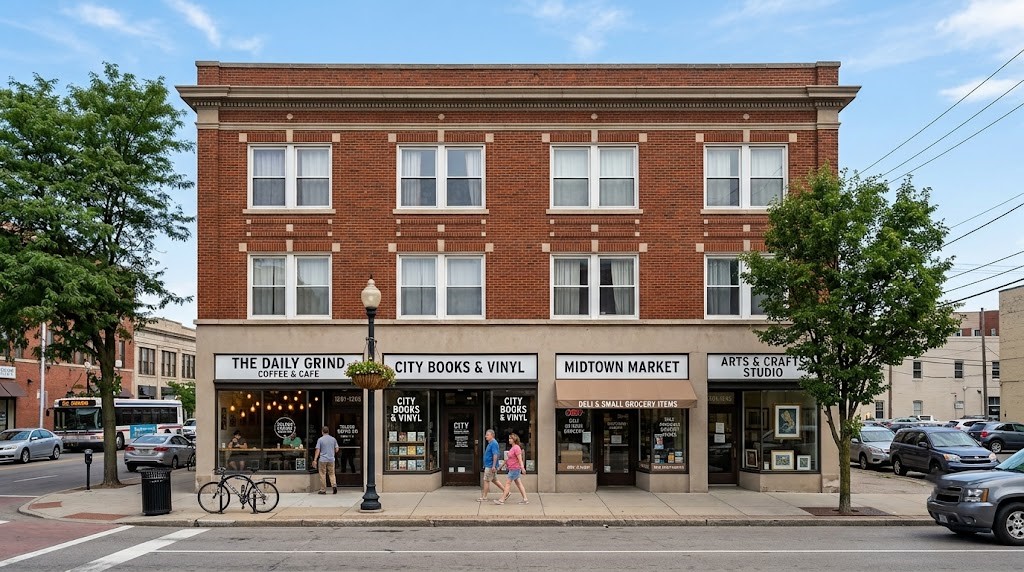
What Counts as “Small Commercial”
“Commercial” covers everything from a corner storefront to a regional mall, so it helps to narrow the scope. This article is about the small end – properties an individual investor could realistically buy:
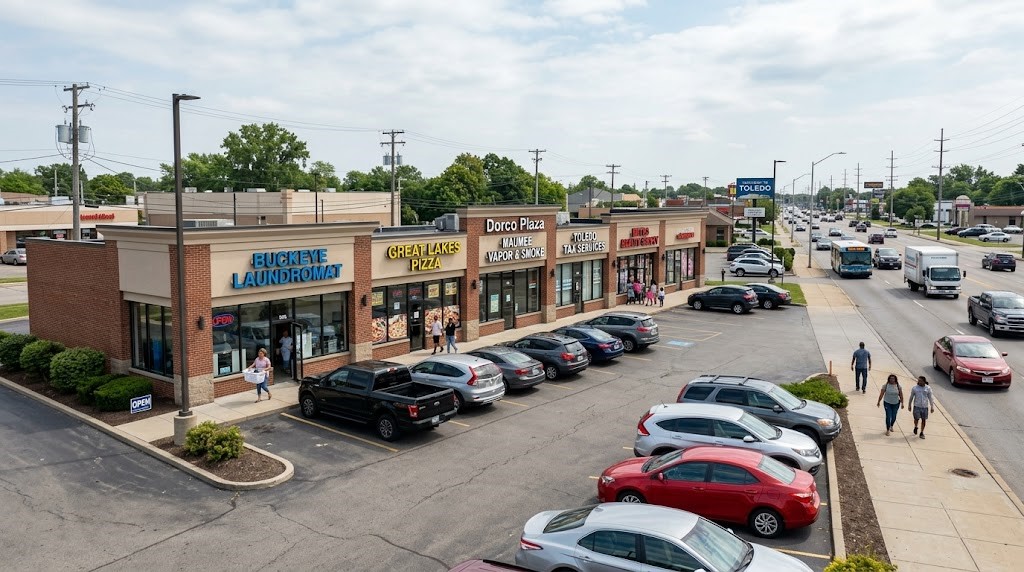
- Retail strip – a small multi-tenant building with a handful of storefronts.
- Mixed-use – commercial space at street level with apartments above, common in older Ohio neighborhoods.
- Small office or flex space – modest professional suites, light industrial, or warehouse-plus-office units.
- Standalone commercial rental – a single building leased to one business tenant.
What these share is scale: they’re accessible to individual investors rather than institutions, and they’re usually the entry point for anyone exploring small commercial real estate in Toledo.
Residential vs. Commercial Investing
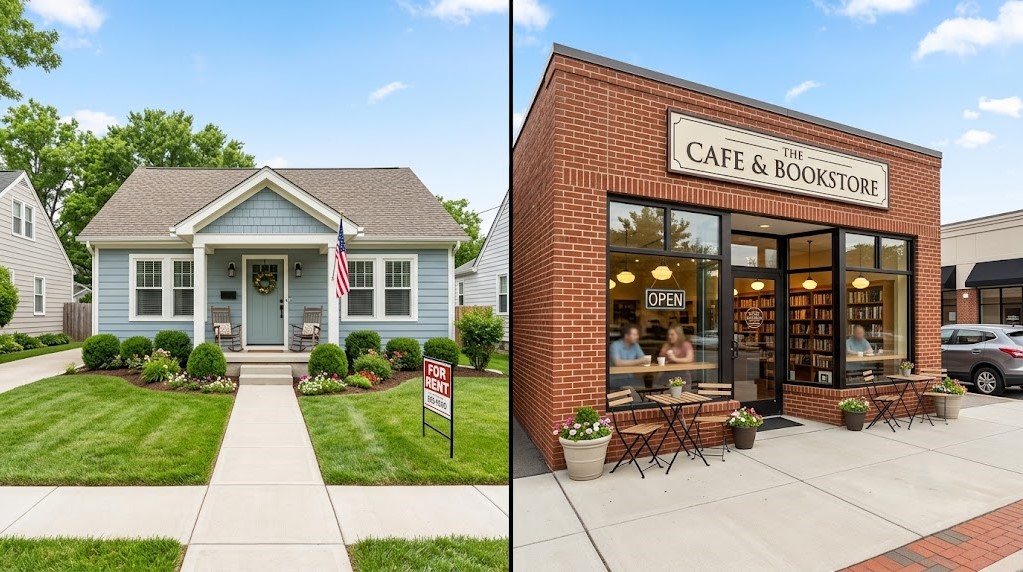
The clearest way to judge the jump is side by side. Figures below are general and illustrative – actual terms vary by lender, property, and deal.
| Dimension | Residential (SFR / small multi) | Small Commercial |
|---|---|---|
| Entry capital | Lower – accessible to most investors | Higher – larger down payment and reserves |
| Financing norms | Longer fixed terms, standard investment loans | Shorter terms, often balloon/refi structures, larger down payment |
| Lease structure | Short residential leases, owner pays most expenses | Longer leases; NNN/CAM can shift taxes, insurance, maintenance to tenant |
| Vacancy risk | Lower – large tenant pool, faster turns | Higher – vacancies can run months; buildout may be needed |
| Management complexity | Simpler; abundant residential PM options | More complex – lease administration, CAM reconciliation |
| Typical cap rate | Generally lower | Often higher – compensating for added risk |
Read that table honestly and the pattern is clear: residential is easier and more forgiving; commercial offers structural advantages in exchange for more risk and complexity. Neither is universally better – they suit different stages.
The Real Appeal of Commercial
The upside is genuine when a deal is sound:
- Longer leases. Commercial tenants often sign multi-year terms, which means less frequent turnover and more predictable income than annual residential leases.
- Tenants cover more expenses. Under a triple-net (NNN) structure, the tenant pays taxes, insurance, and maintenance on top of rent – making your net income far more stable. CAM charges cover shared costs in multi-tenant buildings.
- Commercial cap rate potential. Small commercial frequently trades at higher cap rates than comparable residential, because the market prices in the extra risk.
- Value driven by income. Commercial value keys off net operating income, so improving income or tightening expenses can raise the building’s value directly – a lever residential doesn’t offer as cleanly.
That last point is why experienced operators like commercial: you have more control over value than in a market driven by residential comps.
The Real Challenges for Beginners
Now the other side, stated plainly:
- Financing is tougher. Expect a larger down payment, shorter loan terms, and often a balloon payment requiring refinance – a very different risk profile from a 30-year residential loan.
- Vacancy hurts more. A vacant unit can sit for months, and unlike a rental home, there’s no deep pool of ready tenants. Reserves aren’t optional here.
- Tenant buildout costs. Landing a commercial tenant often means funding improvements to fit their use – real capital before the rent starts.
- Due diligence is heavier. Zoning, environmental review, lease abstraction, and building systems all add layers residential simply doesn’t have.
- Thinner exit market. Fewer qualified buyers means selling can take longer if you need liquidity.
The honest summary: commercial isn’t harder in a way that’s unmanageable – it’s harder in a way that punishes thin capital and light due diligence. If a single extended vacancy would threaten your finances, you’re not ready yet.
Is Toledo a Reasonable Market for It?
The same fundamentals that make Toledo work for rentals apply here: low entry costs relative to larger metros and steady local demand anchored by established employers. That affordability matters even more in commercial, where capital requirements are higher – a smaller entry price makes the asset class reachable at all. The broader market case is covered in why Toledo works for cash flow and is Toledo a good place to invest.
One caution: commercial performance is far more location-specific than residential. Traffic counts, visibility, parking, and the health of the immediate business corridor can vary block to block. A strong residential neighborhood doesn’t automatically make a strong retail location, so evaluate the specific corridor rather than the city.
Buying Your First Commercial Property: What to Evaluate
Before making an offer on any small commercial property for sale in Toledo, work through these:
- Tenant quality and lease terms. Who is the tenant, how long is the lease, what’s their payment history, and who pays which expenses? The lease document is the investment – read it fully.
- Cap rate math. Net operating income divided by price, using real expenses. Ask whether the return compensates for the risk of this specific building and tenant.
- Location and traffic. Visibility, access, parking, and the strength of neighboring businesses.
- Building condition. Roof, HVAC, plumbing, electrical, and parking surface – commercial systems are expensive to replace.
- Zoning and permitted use. Confirm the intended use is allowed, and check for restrictions that could limit your future tenant pool.
The underwriting discipline is the same one that governs any good residential deal – real numbers, no best-case assumptions. If that approach is new to you, the ROI and numbers guide is the right starting point.
Who Should (and Shouldn’t) Start Here
Commercial may be a reasonable next step if you:
- Already own residential rentals and understand underwriting
- Have meaningful capital beyond the down payment for reserves and potential buildout
- Can absorb an extended vacancy without financial strain
- Want longer leases and are comfortable reading lease documents carefully
Stay with residential for now if you:
- Are buying your first investment property
- Are working with tight reserves
- Need reliable, quickly-replaceable cash flow
- Aren’t yet comfortable underwriting a deal on real numbers
There’s no prize for advancing early. Many investors build a solid residential base – including through strategies like the BRRRR method – before adding commercial, and that sequencing is usually the right call.
FAQ
Is commercial real estate a good investment for beginners?
It can be, but it is usually not the best starting point. Commercial deals typically require more capital, shorter loan terms with balloon structures, and more complex due diligence than residential rentals. Investors who already own residential property, understand underwriting, and hold a healthy cash reserve are far better positioned. If you are buying your very first investment property, residential is generally the more forgiving place to learn.
What is a good cap rate for small commercial property?
There is no single correct number. Cap rates vary by property type, tenant quality, lease term, location, and building condition, and they move with the broader market. Small commercial properties often trade at higher cap rates than prime residential because they carry more risk. Rather than target a market average, underwrite the specific property with real income and expenses and judge whether the return compensates you for the risk.
Do I need more capital to start in commercial real estate?
Generally yes. Commercial lenders typically require a larger down payment than residential investment loans, and you also need reserves for longer vacancies and potential tenant buildout costs. The capital cushion matters as much as the down payment, because a commercial vacancy can last months rather than weeks.
What is an NNN lease and why does it matter?
In a triple-net (NNN) lease, the tenant pays property taxes, insurance, and maintenance in addition to base rent, which can make owner expenses more predictable. CAM charges cover shared common-area costs in multi-tenant buildings. Lease structures vary widely, so the actual document governs – always read the lease rather than assuming a property is truly net-leased.
Is commercial vacancy riskier than residential?
Usually yes. A vacant commercial unit can sit for months while you search for a qualified tenant, and you may need to fund buildout to attract one. Residential vacancies are typically filled faster because the tenant pool is much larger. That is why reserves and tenant quality matter more in commercial than almost anything else.
Should I buy a mixed-use property as my first commercial deal?
Mixed-use can be a reasonable bridge for residential investors, since the apartments above provide familiar residential income while the ground-floor commercial space adds upside. It is still more complex than a straight rental, involving two different tenant types, zoning considerations, and often commercial financing. Evaluate the specific building and lease terms rather than the category.
Talk Through a Specific Property
The right answer to “is small commercial worth it?” depends entirely on the building, the lease, and your capital position – which is why the useful conversation is about a specific property, not the category.
Austin Cleghorn is a Toledo investor-friendly Realtor with 4+ years in this market and 500+ properties sold, primarily residential, plus a 6-year U.S. Army background. What carries across asset classes is the approach: disciplined, numbers-first underwriting with real income and expenses, and honesty about when a deal doesn’t pencil – including telling you when residential is still the better fit for where you are.
No pressure, no guesswork. Schedule a consultation to talk through whether a specific mixed-use or small commercial property in Toledo fits your goals, or browse current Toledo listings and communities to see what’s available.