Selling in Toledo? See every seller closing cost in Lucas County for 2026, from the...
Read More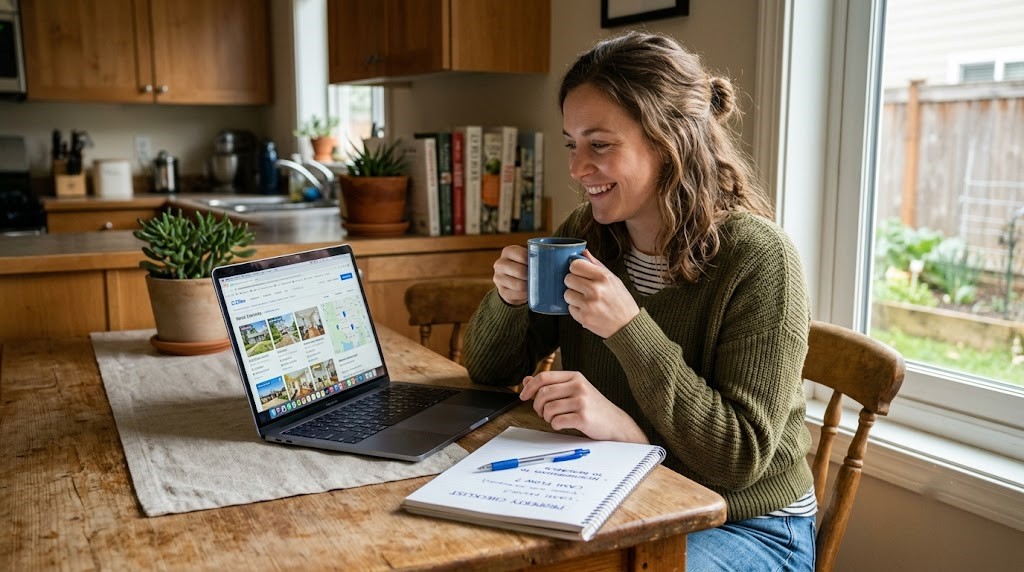
Why Start With Rental Property?
Rental property builds wealth in four ways at once, which is what makes it appealing to beginners who want something more tangible than a brokerage account.
- Cash flow is the money left over each month after the rent pays the mortgage, taxes, insurance, management, and repairs. It’s your monthly profit.
- Appreciation is the increase in the property’s value over time. It’s real, but it’s never guaranteed, so it should be a bonus rather than your plan.
- Leverage means using borrowed money to control a larger asset. Put 20 percent down and you control 100 percent of the property, so your returns are calculated on the full value while you only funded part of it.
- Tax advantages include deductions for mortgage interest, insurance, repairs, management, and depreciation, a paper expense that can reduce taxable income. Talk to a tax professional about your situation.
The honest counterweight: rental property isn’t passive, and it isn’t risk-free. Tenants turn over, furnaces die, and markets shift.
How Much Money Do You Actually Need?
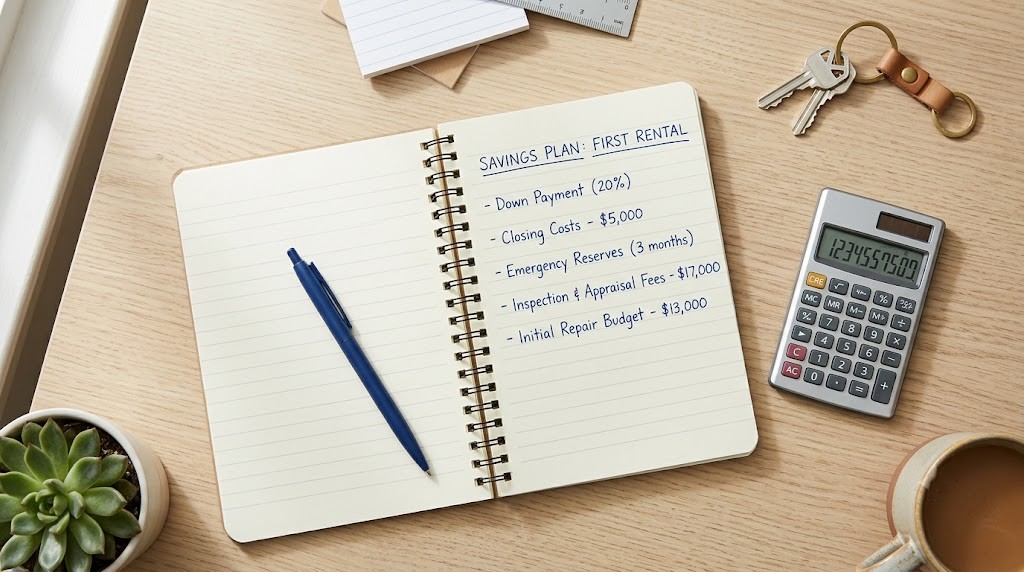
This is the first question nearly every beginner asks, and it deserves a straight answer instead of a “no money down” pitch. For a typical financed purchase, budget for four things:
- Down payment. Investment property loans typically require around 20 to 25 percent down, higher than the owner-occupant loans you may have seen advertised.
- Closing costs. Usually about 2 to 5 percent of the purchase price, covering lender fees, title work, and related charges.
- Reserves. Cash set aside for repairs, vacancy, and surprises. This is the piece beginners skip and later regret.
- Immediate repairs. Anything the property needs before a tenant can move in.
Here’s the part that changes everything: those percentages apply to the purchase price, so the market you choose determines the dollar amount. Twenty-five percent down on a $400,000 coastal property is $100,000. On a $110,000 property in an affordable Midwest market, it’s $27,500. Same strategy, very different barrier to entry.
A word on financing: conventional investment loans are the most common path. Some beginners instead buy a small multifamily property, live in one unit, and rent the others, which can qualify them for lower owner-occupant down payments. Whatever route you take, talk to a lender early, before you shop.
Your First Rental Property Roadmap
These are the first rental property steps, in the order that actually works:
- Define your goal. Are you after monthly income, long-term equity, or both? A beginner chasing cash flow buys very differently than one chasing appreciation.
- Assess your capital and get pre-approved. Talk to a lender to learn what you qualify for and what your true cash-to-close looks like. This sets your budget before emotion enters the picture.
- Pick a market and a strategy. Decide where the numbers work and whether you want a turnkey rental (renovated and rent-ready) or a project. More on choosing a market below.
- Build your team. An investor-friendly agent, a lender, an inspector, a contractor, and a property manager. You do not need to know everything if you know the right people.
- Analyze deals. Run the numbers on many properties. Most will fail, and that’s the point. Volume is how you learn to recognize a good one.
- Make an offer. Offer based on what the numbers support, not what the seller is asking. Being willing to walk away is your greatest advantage.
- Inspect and close. Always get a professional inspection, then finalize your loan, clear title, and close.
- Manage it well. Hire a property manager or self-manage deliberately. Good management protects everything you just built.
Analyzing a Rental Deal
This is the core skill. Analyzing a rental deal comes down to three concepts, and none of them require advanced math.
Rent-to-price ratio: monthly rent divided by purchase price. The “1% rule” is a rule of thumb (not a guarantee) suggesting a property deserves a closer look if monthly rent is at least 1 percent of the price.
Cash flow: what’s left after every expense is paid.
Cap rate: annual net operating income divided by purchase price, showing the return if you bought in cash.
Cash-on-cash return: annual cash flow divided by the actual cash you invested, which is the number most beginners care about.
Cash flow: what’s left after every expense is paid.
Cap rate: annual net operating income divided by purchase price, showing the return if you bought in cash.
Cash-on-cash return: annual cash flow divided by the actual cash you invested, which is the number most beginners care about.
The mistake beginners make is subtracting only the mortgage. Here’s what a complete analysis looks like:
Hypothetical example – illustrative numbers only
| Purchase price | $120,000 |
| Monthly rent | $1,200 |
| Mortgage (principal & interest) | -$600 |
| Property taxes | -$200 |
| Insurance | -$90 |
| Property management (about 9%) | -$108 |
| Vacancy reserve (about 8%) | -$96 |
| Maintenance & CapEx reserve | -$120 |
| Estimated monthly cash flow | -$14 |
Notice the result: this deal loses about $14 a month. On a napkin (rent minus mortgage) it looked like $600 of profit. That gap between the napkin and the truth is where beginners get hurt, and it’s why every expense line belongs in your analysis from the start.
The fix isn’t to abandon the deal type. It’s to buy at a price and rent where the numbers still work after all eight lines. That usually means a market where prices are low relative to rents.
Not sure if a deal actually pencils?
Send over a property you’re looking at. You’ll get the real numbers back, not a sales pitch.
No pressure. No obligation.
Beginner BRRRR Explained
BRRRR stands for Buy, Rehab, Rent, Refinance, Repeat. You buy a property that needs work, renovate it, place a tenant, then refinance based on the new higher value, ideally pulling most of your original cash back out to buy the next one.
The appeal: it recycles your capital, so the same money can buy several properties over time instead of one.
The honest downside for a first-timer: it adds a renovation to a process you’re still learning. Rehab budgets run over, contractors fall through, and the refinance may appraise lower than hoped, leaving your cash trapped.
For most beginners, a turnkey first deal builds the experience and team relationships that make a later BRRRR far safer. There’s no prize for choosing the harder path first.
Common Beginner Mistakes
- Overpaying because you like the house. You’re buying an income stream, not a home. The numbers decide.
- Underestimating expenses. The napkin math above is the single most common way beginners talk themselves into a losing deal.
- Skipping the inspection to save a few hundred dollars on a cheap property. The cheap property is cheap for a reason.
- Hiring the cheapest property manager. Poor management causes vacancy, turnover, and deferred maintenance that cost far more than the fee you saved.
- No reserves. A roof or furnace early in ownership shouldn’t threaten your finances.
- Analysis paralysis. Waiting for a perfect deal that doesn’t exist. Analyze many, buy one that genuinely works.
- Buying in the wrong market for your goal. Which brings us to the biggest decision of all.
Choosing Where to Invest
Most beginners assume they should buy near home. That instinct is understandable, but it works against you if your local market is expensive. In high-cost metros, even a well-negotiated purchase often produces negative cash flow, leaving you subsidizing the property monthly and hoping appreciation rescues you later.
The alternative is to invest where the numbers work. Affordable Midwest markets tend to be friendlier to first-timers for three reasons: lower entry prices mean a smaller down payment, rents are steady relative to those prices, and the rent-to-price ratios that make cash flow possible are far easier to hit.
Toledo, Ohio is a good illustration of that profile. Entry prices sit well below coastal pricing, rental demand is anchored by established employers, and in many neighborhoods deals can approach the 1 percent benchmark that’s nearly unreachable in expensive metros. The broader case is laid out in why Toledo works for cash flow and is Toledo a good place to invest.
The obvious worry is buying somewhere you don’t live. It’s a fair concern with a practical answer: remote investing is routine now. Video walkthroughs, independent inspections, remote closings, and vetted local property management let investors buy confidently from anywhere, as the out-of-state investors guide explains step by step.
Wondering what your budget can actually buy?
One short conversation will tell you what your capital can realistically get you.
No pressure. No obligation.
Building a Rental Portfolio
A well-bought first property does more than produce rent. It gives you a track record with lenders, a working relationship with an agent and a property manager, and the confidence that comes from having done it once.
Building a rental portfolio usually happens through one of three paths: saving cash flow toward the next down payment, refinancing to pull out equity as values rise, or using BRRRR to recycle the same capital repeatedly.
The pattern that holds across all three is patience. Investors who buy one solid property, learn the systems, and then repeat tend to build steadily. Those who rush into several deals before understanding the math tend to spend years fixing the first mistakes. Deal two is far easier than deal one, provided deal one was bought correctly. For a deeper look at the underwriting behind that, see the ROI and numbers guide.
FAQ
How much money do I need to start investing in rental property?
For a financed purchase, plan on a down payment of roughly 20 to 25 percent for an investment loan, plus closing costs of about 2 to 5 percent of the price, plus a cash reserve for repairs and vacancy. In lower-cost markets that total can be far more manageable than in expensive metros. Be skeptical of no-money-down promises; the reserve in particular is what keeps one bad month from sinking your first deal.
Is rental property a good investment for beginners in 2026?
It can be, if you buy on fundamentals rather than hope. Rental property offers cash flow, long-term appreciation, leverage, and tax advantages, but it is not passive and it is not guaranteed. Beginners do best when they buy in affordable markets where the numbers work from day one, keep real reserves, and use professional management rather than betting on prices rising.
Should my first rental be a BRRRR or a turnkey property?
For most first-timers, turnkey is the safer start. A renovated, often already tenanted property lets you learn ownership without also managing a renovation. BRRRR can recycle your capital faster, but it depends on accurate rehab budgets and a reliable contractor, and mistakes are expensive. Many investors do one or two turnkey deals first, then move into BRRRR once they trust their team.
What is the 1% rule in rental property investing?
The 1% rule is a rule of thumb, not a guarantee. It says a property is worth a closer look if the monthly rent is at least 1 percent of the purchase price. It is only a quick screen: a property that passes still needs full underwriting with real taxes, insurance, management, vacancy, and capital expenses before you can call it a good deal.
Should I invest locally or out of state?
Invest where the numbers work, not simply where you live. If your local market is expensive, deals may not cash flow no matter how well you buy. Many beginners buy in affordable Midwest markets where entry prices are low and rents are steady, using video walkthroughs, independent inspections, remote closings, and local property management to handle the distance.
How long does it take to buy your first rental property?
Once you have your capital and financing in place, a purchase often takes about 30 to 60 days from accepted offer to closing. The longer part is usually the preparation: defining your goals, getting pre-approved, choosing a market, building your team, and analyzing enough deals to recognize a good one. Give yourself a few months rather than rushing the first purchase.
Talk Through Your First Deal

If you’ve read this far, you already know more than most people who buy their first rental. The next step isn’t finding a property. It’s getting clear on your goals, your capital, and whether the market you’re considering can actually produce the returns you want.
Austin Cleghorn is an investor-friendly Realtor with 4+ years in the Toledo market, 500+ properties sold, and a 6-year U.S. Army background. He works with beginners and out-of-state investors, underwrites every deal with real rents, taxes, insurance, and management costs, and will tell you plainly when a property doesn’t pencil.
No pressure, no guesswork. Schedule a free consultation to talk through your first deal and find out whether an affordable cash-flow market like Toledo fits your goals. Questions are welcome even if you’re still early in your research and not ready to buy yet.