Selling in Toledo? See every seller closing cost in Lucas County for 2026, from the...
Read MoreFor most out-of-state buyers, financing a rental property out of state is the biggest unknown in the entire process – more confusing than finding the deal itself. Between DSCR loans, conventional investor mortgages, and hard money for a rehab, it’s not always clear which option applies to your situation, or whether living in another state changes anything.
This guide breaks down the real options for financing a rental property out of state in Toledo, Ohio: how each loan type actually works, what factors typically influence qualification, and how BRRRR financing differs from a standard purchase. No invented rates or ratios – just the mechanics, so you know what to ask a lender.
Educational disclaimer: This article explains financing concepts and is not financial or lending advice. Interest rates, DSCR ratio requirements, and down payment minimums change frequently and vary by lender – nothing here should be treated as a current quote. Confirm actual terms with a licensed lender before making financing decisions.

Can Out-of-State Investors Even Get Financing?
Yes – and this is worth stating plainly, because it’s the first thing new out-of-state investors worry about. Lenders finance investors across the country every day. What matters is the property’s numbers and your qualification profile, not your home address.
In fact, entire categories of lending exist because so much investor business is remote:
- DSCR lenders often specialize in investors who don’t live near the property.
- Remote/e-notary closings are standard practice, not a special accommodation.
- Title companies routinely coordinate closings for buyers who never set foot in the state.
Your location isn’t the obstacle. Working with a lender who’s actually experienced in lending for out-of-state investors is what makes the process smooth. For the fuller remote-buying picture, see the out-of-state investors guide.
DSCR Loans Explained
A DSCR loan for a rental property flips the usual qualification logic. Instead of your personal income and employment history driving approval, the property’s rental income does.
DSCR stands for Debt-Service Coverage Ratio: it measures whether the property’s rental income covers its mortgage payment. Lenders typically want that income to cover the payment at or above a set ratio, commonly discussed in the rough range of 1.0 to 1.25, though this varies meaningfully by lender and shifts over time – never treat a specific number here as current fact.
Why it appeals to out-of-state and self-employed investors specifically:
- Minimal personal income documentation compared to a conventional mortgage.
- The deal qualifies on its own merits, which suits investors with complex or self-employed income.
- Scales more easily across multiple properties, since each deal is judged on its own numbers rather than compounding against your personal debt-to-income ratio.
DSCR vs. Conventional vs. Hard Money
Here’s how the three main options compare. Figures below are general and illustrative, not current quotes – always confirm actual terms with a lender.
| Dimension | DSCR | Conventional Investor | Hard Money |
|---|---|---|---|
| What qualifies you | Property’s rental income (cash flow) | Personal income, credit, DTI | The asset / deal itself |
| Typical use case | Buy-and-hold, portfolio scaling | First-time or W-2 investors | BRRRR purchase and rehab |
| Speed to close | Moderate | Typically slower, more documentation | Fast – often the main advantage |
| General cost / rate positioning | Typically higher rate than conventional | Often the most competitive long-term rate | Typically highest rate, short term |
No single option is “best” – each fits a different situation. A first-time buy-and-hold investor with strong W-2 income often leans conventional. A self-employed or scaling investor often leans DSCR. Anyone tackling a rehab typically starts with hard money and refinances out.
Not sure which loan type fits your situation?
Get connected with a lender experienced in investor and out-of-state financing before you start shopping.
No pressure. No obligation.
Down Payment Expectations for Investment Property
Down payment on investment property is almost always higher than what you’d put down on a home you live in. Lenders treat non-owner-occupied properties as higher risk, and price the down payment requirement accordingly.
Exact minimums vary by loan type, lender, and your qualification profile – there’s no single percentage that applies universally, and it shifts over time. Rather than anchoring on a number you saw somewhere, confirm current down payment requirements directly with a lender for your specific deal. It’s one of the first things worth nailing down before you start making offers, since it directly shapes the cash-flow math in the ROI and numbers guide.
Hard Money for BRRRR
Hard money for BRRRR serves a specific, temporary purpose: funding the purchase and rehab of a property that a conventional or DSCR lender won’t touch in its current, distressed condition.
Key characteristics:
- Short-term – typically measured in months, not years.
- Asset-based – underwritten primarily on the property and the deal, not your personal financials.
- Funds purchase plus rehab – often structured to cover both the acquisition and construction draws.
- Meant to be replaced – the entire point is a bridge to a permanent refinance once the property is stabilized, not a long-term hold.
Because it’s asset-based and faster to close, hard money typically carries a materially higher rate than DSCR or conventional financing – the cost of speed and flexibility. For the full mechanics of how rehab financing fits the broader strategy, see the BRRRR method explained and current Toledo BRRRR properties.
Refinance After Rehab
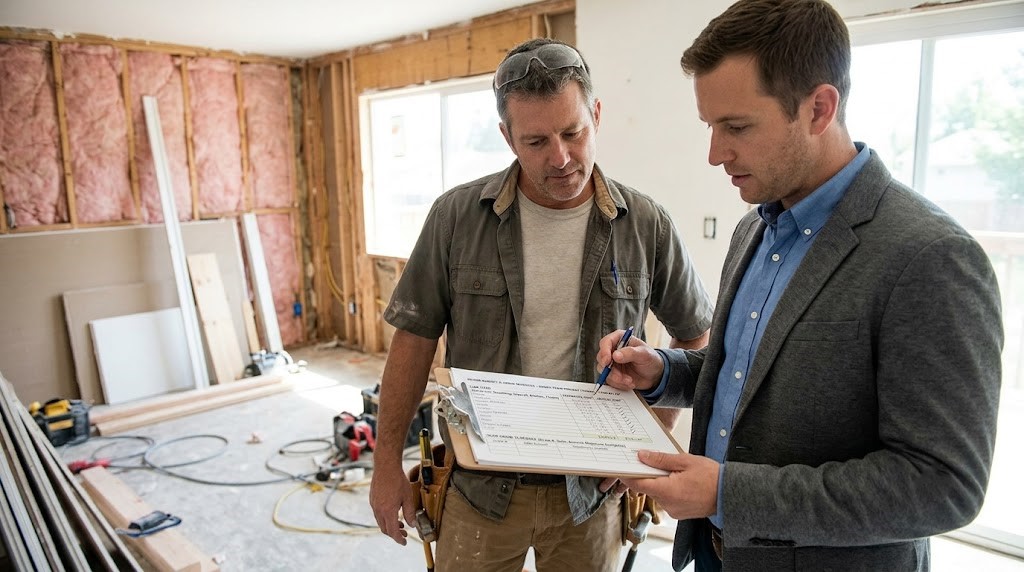
The “R” in BRRRR that trips people up is refinance after rehab, so here’s the mechanism plainly:
- Seasoning period. Lenders commonly require a period of ownership, often several months, before they’ll refinance based on the property’s new value rather than your original purchase price. Confirm the current requirement with your lender before planning a timeline around it.
- ARV-based appraisal. An independent appraiser confirms the after-repair value – your rehab receipts don’t set the number, comparable sales do.
- New loan decision. You then refinance into either a DSCR or conventional loan, based on which fits your qualification profile and goals at that point.
This is exactly why the refinance after rehab step ties directly back to the DSCR vs. conventional decision above – it’s not a separate choice, it’s the same one, just made after the property is stabilized instead of before you buy.
Building Your Lending Team as an Out-of-State Investor
A lender who’s never closed a remote, investor-focused deal will slow you down with questions a specialist wouldn’t even ask. Working with someone experienced in investment mortgage products, DSCR underwriting, and remote closings specifically is what keeps a deal moving.
Here’s the honest framing of Austin’s role: he is not a mortgage lender or loan officer, doesn’t originate loans, and doesn’t set terms. What he does is help investors understand their options conceptually and coordinate with lenders as part of the buying process – connecting clients with lenders experienced in investor, DSCR, and out-of-state financing, so the financing piece isn’t something you’re figuring out alone. All actual loan terms, approval, and underwriting come directly from the lender. For the broader case behind financing a Toledo rental in the first place, see why Toledo works for cash flow.
Ready to line up financing before you shop for a deal?
Get connected with lenders who actually understand DSCR, BRRRR, and remote investor closings.
No pressure. No obligation.
Questions to Ask a Lender Before Choosing Them
Copy this list and ask every lender you interview the same questions:
Questions to Ask a Lender
- What loan products do you offer for investment property (DSCR, conventional, other)?
- What is your current rate positioning and how is it determined for my situation?
- What DSCR ratio do you require, and how is it calculated?
- What down payment do you require for this loan type and property?
- What are your prepayment terms, if any?
- What is your typical closing timeline?
- How much experience do you have with out-of-state or remote investors?
- What seasoning period do you require before a cash-out refinance?
- Can you provide references from recent investor clients?
FAQ
What is a DSCR loan and how does it work?
A DSCR (Debt-Service Coverage Ratio) loan qualifies you based on the property’s rental income relative to its mortgage payment, rather than your personal income or employment history. Lenders typically want the property’s income to cover the mortgage payment at or above a set ratio, often discussed in the rough range of 1.0 to 1.25, though this varies by lender and changes over time. It’s popular with self-employed and out-of-state investors because personal income documentation matters much less than the deal’s own numbers.
Can out-of-state investors get financing for a Toledo rental?
Yes. Lenders finance investors across the country regularly, and what matters most is the property’s numbers and your qualification profile, not which state you live in. Many lenders specialize in remote, investor-focused, and DSCR lending specifically because so much of this business is now out-of-state. The key is working with a lender experienced in remote closings rather than assuming your location is a barrier.
How does BRRRR refinancing work?
After the rehab is complete and the property is rented, you refinance out of the short-term hard money loan into a longer-term loan, commonly DSCR or conventional, based on the property’s new appraised value (ARV) rather than the original purchase price. Lenders typically require a seasoning period, often several months of ownership, before they’ll refinance based on that new value. The amount of capital returned depends on the appraisal and the lender’s loan-to-value terms at that time.
Do I need a higher down payment for an investment property?
Generally yes. Investment properties typically require a larger down payment than an owner-occupied home, since lenders view non-owner-occupied properties as higher risk. Exact minimums vary by loan type, lender, and your qualification profile, so rather than relying on a rule of thumb, confirm current down payment requirements directly with a lender for your specific situation.
What’s the difference between DSCR, conventional, and hard money loans?
Conventional investor loans qualify you on personal income, credit, and debt-to-income ratio, typically offering the most competitive long-term rates for buy-and-hold investors who qualify. DSCR loans qualify you on the property’s rental income instead, appealing to self-employed or portfolio investors. Hard money is short-term, asset-based financing used mainly to fund a BRRRR purchase and rehab, meant to be replaced by a refinance once the property is stabilized.
Does Austin Cleghorn offer financing or loans directly?
No. Austin is an investor-friendly Realtor, not a mortgage lender or loan officer. He helps investors understand their financing options conceptually, coordinates with lenders as part of the buying process, and connects clients with lenders experienced in investor, DSCR, and out-of-state financing. All loan terms, rates, and approvals come directly from a licensed lender, not from Austin.
Talk Through Your Financing Options

Austin Cleghorn is a Toledo investor-friendly Realtor with 4+ years in this market, 500+ properties sold, and a 6-year U.S. Army background. He coordinates inspections, lenders, title, and contractors so out-of-state clients can close from anywhere, and connects investors with lenders experienced in DSCR, conventional, and hard-money-to-refinance BRRRR financing.
No pressure, no guesswork. Schedule a consultation to talk through your financing options and get connected with lenders experienced in out-of-state investor deals.