
Selling in Toledo? See every seller closing cost in Lucas County for 2026, from the...
Read MoreThree strategies get thrown around in real estate investing circles, and they get lumped together more often than they should. Choosing between flipping vs buy and hold real estate is not really a preference question. It is a decision about how much capital you can tie up, how hands-on you want to be, and how quickly you need a return. Add BRRRR to the mix and the choice gets murkier still, since it borrows pieces from both.
This guide breaks down flipping vs. buy-and-hold real estate in Toledo, Ohio on their own terms, plus BRRRR as the middle path many investors have not fully considered. We will walk through what each strategy actually requires, compare all three side by side in one table, and end with a self-assessment framework you can use before you start looking at Toledo properties.
In This Guide
- Flipping Explained: What It Is and Who It's For
- Can You Flip a House From Out of State?
- Buy-and-Hold Explained: Building Wealth the Slow, Steady Way
- BRRRR Explained: Buy-and-Hold's More Capital-Efficient Cousin
- Flipping vs. Buy-and-Hold Real Estate in Toledo: The Comparison Table
- Capital and Timeline: What Each Strategy Actually Demands
- Tax Treatment at a Glance
- Which Real Estate Investment Strategy Is Right for You?
- Why Most Out-of-State Toledo Investors Lean Buy-and-Hold or BRRRR
- FAQ
Flipping Explained: What It Is and Who It's For
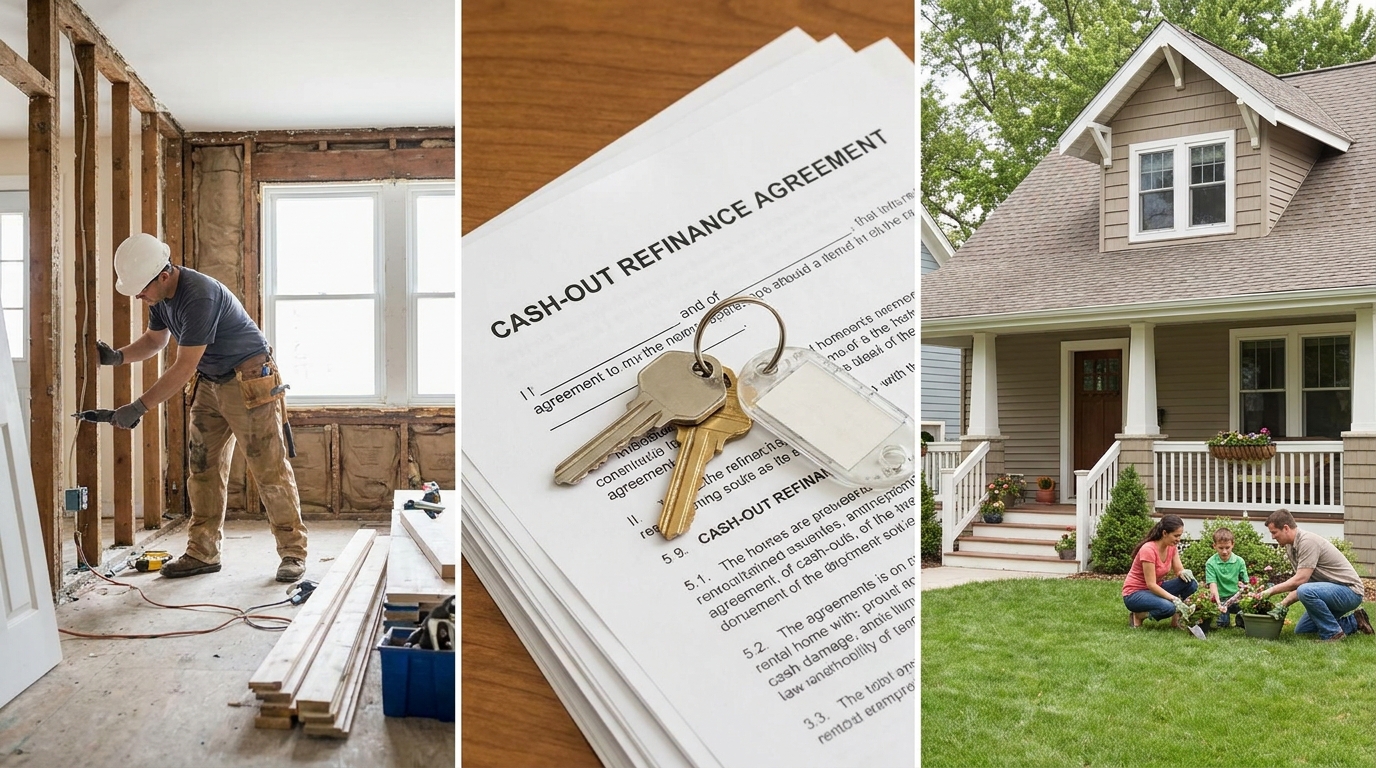
House flipping means buying a property below market value, typically because it needs work, renovating it, and reselling it for a profit, usually within months rather than years. The entire strategy is built around forced appreciation. You are not collecting rent or waiting for the market to do the work. You are creating value through the renovation itself and capturing that value at resale.
House flipping Toledo Ohio deals tend to move fast once a contract is signed. A typical timeline runs from purchase through renovation to a closed sale in roughly three to nine months, though a difficult rehab or a slower buyer's market can stretch that considerably. Every month the property sits unsold adds carrying costs, including loan interest, insurance, utilities, and property taxes, that eat directly into the profit margin.
Flipping demands a lot from the investor. You need the ability to accurately estimate rehab costs before you buy, a reliable network of contractors who show up and finish on schedule, and the stomach for holding-cost risk if the sale takes longer than planned. It tends to suit investors who want faster capital turnover, have construction or project-management experience (or a contractor they trust completely), and are comfortable with an active, hands-on role from purchase through closing.
Can You Flip a House From Out of State?
Here is the honest answer: flipping remotely is possible, but it is genuinely harder than running a buy-and-hold or BRRRR deal from a distance, and it is worth setting realistic expectations before you try.
A flip runs on fast decisions. Change orders come up mid-renovation. A contractor finds something behind the drywall that was not in the original scope. A listing decision needs to be made the same week the rehab wraps. When you are hundreds of miles away, every one of those decisions depends on a local team you trust enough to act without you standing in the room. That is a much higher bar than the review-a-monthly-statement pace of managing a rental from out of state.
This is really the active vs passive real estate investing question in miniature. Flipping sits firmly on the active end of that spectrum no matter where you live, and living out of state pushes the difficulty higher still. If you are set on flipping remotely, plan on an unusually strong local team, meaning a contractor you would trust with your own house and an agent who can walk a property and give you a straight answer within hours, before you close on anything.
Buy-and-Hold Explained: Building Wealth the Slow, Steady Way
Buy-and-hold investing means purchasing a property and holding it as a long-term rental, rather than reselling it quickly. Returns build in three ways at once: monthly cash flow after expenses, gradual property appreciation over the years you hold it, and equity paydown as your tenants' rent covers the mortgage principal.
None of those three drivers depends on a fast sale or a perfectly timed market. That is the appeal for buy and hold rental property Toledo investors in particular. You are not racing a renovation clock or betting the whole return on one closing date. You are underwriting a property to cash flow from day one and letting time do the rest of the work.
Once a property is stabilized, buy-and-hold is also the lowest-involvement of the three strategies, especially with a vetted local property manager handling day-to-day tenant issues. Austin connects out-of-state clients with vetted local property managers rather than managing properties himself. This strategy tends to suit investors who want a longer time horizon, are comfortable with a slower initial payout in exchange for compounding returns, and prefer a more passive role after the purchase closes.
BRRRR Explained: Buy-and-Hold's More Capital-Efficient Cousin
BRRRR stands for Buy, Rehab, Rent, Refinance, Repeat. It borrows the forced-appreciation engine from flipping, buying under market value and adding value through renovation, but instead of selling at the end, you refinance based on the property's new, higher value, pull a significant portion of your original capital back out, and keep the property as a long-term rental.
Done well, BRRRR lets you recycle much of your original investment into the next deal while still holding an income-producing property. That is why it is often described as buy-and-hold's more capital-efficient cousin rather than a separate category entirely, and why the BRRRR vs flipping houses comparison trips up so many new investors who assume BRRRR is just a flip that skips the sale. For a full walkthrough of the process, including underwriting and the refinance timeline, see our dedicated BRRRR method explained guide, and browse current Toledo BRRRR properties if you want to see what a candidate deal looks like on paper.
The tradeoff is that BRRRR asks more of you upfront than a straightforward buy-and-hold purchase. You are managing a rehab, or overseeing one remotely, before the refinance and rental income phase even begins, which is closer in intensity to flipping than most new investors expect going in.
Not Sure Which Path Fits Your Capital?
Austin will walk through your numbers, timeline, and risk tolerance with you. No pressure, no guesswork.
Book a Free ConsultationNo pressure. No obligation.
Flipping vs. Buy-and-Hold Real Estate in Toledo: The Comparison Table
Reading about each strategy separately only gets you so far. The flipping vs. buy-and-hold real estate decision, with BRRRR sitting in between, becomes a lot clearer once you see all three side by side, across the factors that actually determine whether a strategy fits your situation.
| Factor | Flipping | BRRRR | Buy-and-Hold |
|---|---|---|---|
| Capital Required Upfront | High. Purchase price plus a full rehab budget and holding costs, usually before any money comes back. | High during the rehab phase, similar to flipping, though designed to return much of that capital via refinance. | Moderate. Down payment, closing costs, and a reserve fund, with no large rehab budget in most cases. |
| Typical Timeline to Profit or Cash Flow | Short. Often a few months to under a year, ending at resale. | Medium. Rehab plus a seasoning period before refinance, often several months to around a year before capital is returned and rental cash flow begins. | Immediate to short. Cash flow can start the first month a tenant moves in. |
| Hands-On Involvement | Very high. Active project management from purchase through resale. | High during rehab and refinance, then drops toward buy-and-hold levels once stabilized. | Low to moderate, especially with a property manager in place. |
| Feasibility for Out-of-State Investors | Difficult. Requires an unusually strong, trusted local team. | Moderate to difficult during rehab, easier once the property is stabilized and rented. | Well suited. This is the strategy most out-of-state investors execute successfully. |
| Primary Profit Driver | Forced appreciation, captured through resale. | Forced appreciation, captured through refinance, plus ongoing cash flow and appreciation afterward. | Cash flow, appreciation, and equity paydown over time. |
| Tax Treatment (General) | Often taxed as ordinary income if you are classified as a dealer, typically a less favorable outcome. Confirm your situation with a CPA. | Generally investor treatment, since the intent is to hold and rent rather than resell. Confirm with a CPA. | Generally investor treatment, with potential long-term capital gains and depreciation benefits. Confirm with a CPA. |
| Risk Profile | Higher. Renovation, market timing, and holding-cost risk are concentrated into a short window. | Moderate to high. Rehab and refinance risk upfront, then it behaves like buy-and-hold. | Lower to moderate. Risk is spread out over a longer holding period. |
Capital and Timeline: What Each Strategy Actually Demands
Beyond the table, it helps to think about capital and timeline as two separate questions, because they do not always move together.
Flipping concentrates the most capital into the shortest window. You typically need the full purchase price, or a hard money loan covering most of it, a realistic rehab budget with a contingency cushion for the surprises every renovation turns up, and enough reserve to cover several months of holding costs if the sale takes longer than planned. None of that capital comes back until closing day.
Buy-and-hold spreads capital out differently. The down payment and closing costs are your main upfront cost, and after that, ongoing capital needs are limited to reserves for vacancy, repairs, and turnover between tenants. There is no rehab budget racing against a resale deadline.
BRRRR sits closer to flipping in the early stages, since you are funding a purchase and rehab before any income arrives, but it is structured to return a large share of that capital through the refinance, at which point the ongoing demands look much more like buy-and-hold. Investors running a real estate investment strategy comparison often underestimate how similar BRRRR's first few months feel to a flip, and how different the following years feel from one. If financing is the piece you are least sure about, our guide to financing a rental property out of state walks through DSCR, conventional, and hard money options for each of these paths in more detail.
Tax Treatment at a Glance
Note: This section is general and directional only. Tax law is fact-specific, changes over time, and depends on your individual circumstances, so treat this as a starting point for a conversation with a CPA or tax professional, not a substitute for one.
Flipping houses taxes tend to surprise first-time flippers. If the IRS classifies you as a dealer rather than an investor, based largely on how frequently you flip and your intent at purchase, profit from a flip is typically taxed as ordinary income rather than at the more favorable long-term capital gains rates, and it can also trigger self-employment tax. Dealer-classified properties are also generally not eligible for a 1031 exchange, since the property is treated as inventory held for resale rather than as a long-term investment.
Buy-and-hold and BRRRR properties are generally treated differently, since the intent from the outset is to hold and rent rather than resell. That typically opens the door to long-term capital gains treatment if you eventually sell after holding more than a year, ongoing depreciation deductions while you hold the property, and potential 1031 exchange eligibility when you do sell.
None of this is a reason to rule flipping out. It is a reason to run the after-tax numbers, not just the gross profit, before you commit to a strategy, and to have that conversation with a CPA who knows your full financial picture.
Want a Second Set of Eyes on the Numbers?
Austin underwrites every deal with real numbers and will tell you honestly if a strategy does not pencil out.
Schedule a ConsultationNo pressure. No obligation.
Which Real Estate Investment Strategy Is Right for You?
Use these five questions as a self-assessment framework rather than a quiz with a single right answer. Most investors find that two or three questions point clearly toward one strategy, even before they finish all five.
- How much capital do you have available, and how much of it can you afford to have tied up? Flipping and the early phase of BRRRR both concentrate capital into a short window. Buy-and-hold spreads it out.
- What is your risk tolerance? Flipping carries the most concentrated risk. Buy-and-hold spreads risk over a longer period. BRRRR sits in between, front-loaded but easing over time.
- How involved do you want to be? This is the active vs passive real estate investing question directly. Flipping is the most active. Buy-and-hold, once stabilized, is the most passive.
- Are you local or out of state? Distance changes the calculus significantly, especially for flipping and the rehab phase of BRRRR.
- How soon do you need a return? Flipping can produce a return in months. Buy-and-hold and BRRRR are built for investors thinking in years, not months.
If you are still weighing which real estate investment strategy is right for me, walking through these five questions with someone who underwrites deals for a living, rather than alone with a spreadsheet, tends to surface the answer faster.
Why Most Out-of-State Toledo Investors Lean Buy-and-Hold or BRRRR
Look back at the comparison table and a pattern emerges. Feasibility for out-of-state investors is the one factor where buy-and-hold and BRRRR, once stabilized, clearly outperform flipping, and it is not a small factor. Distance amplifies every weakness flipping already has: the need for fast, in-person decisions, the reliance on a local team you cannot fully vet from a laptop, and the concentrated holding-cost risk if a sale slips.
That is the honest, numbers-driven reason most of Austin's out-of-state clients gravitate toward buy-and-hold and BRRRR rather than flipping, not because flipping is a bad strategy in general, but because it asks for a level of local, hands-on involvement that is hard to replicate from another state. Austin's own track record, 4+ years and 500+ properties sold, built primarily around cash-flowing buy-and-hold and BRRRR deals for out-of-state investors, reflects where that fit tends to land for this audience.
None of this rules flipping out for the right investor, particularly one with local roots, construction experience, or a trusted contractor already in place. For a deeper look at why the Toledo market specifically supports the buy-and-hold case, see why Toledo beats bigger metros on cash flow, and for a broader walkthrough of buying remotely, see the out-of-state investor's guide. You can also review current Toledo real estate ROI numbers to see how the cash-flow math tends to work in practice. If the decision still feels close after all that, the fastest way through it is usually a conversation, not another spreadsheet.
FAQ: Flipping, BRRRR, and Buy-and-Hold Questions
Is flipping or buy-and-hold more profitable?
It depends on how you define profitable. A successful flip can return a larger lump sum faster, but buy-and-hold and BRRRR build wealth through compounding cash flow, appreciation, and equity paydown over years, plus generally more favorable tax treatment. Neither is universally more profitable; the better question is which one fits your capital, timeline, and risk tolerance.
Can I flip a house from out of state?
It is possible, but it is genuinely harder than running a buy-and-hold or BRRRR deal remotely. Flipping depends on fast, local decisions during the rehab, so you need an unusually strong, trusted local team before attempting it from a distance.
What is BRRRR and how is it different from flipping?
BRRRR stands for Buy, Rehab, Rent, Refinance, Repeat. Like flipping, it starts by adding value through renovation, but instead of selling, you refinance based on the new value, pull much of your capital back out, and keep the property as a long-term rental.
How much capital do I need to start flipping vs. buy-and-hold?
Flipping generally requires the most capital concentrated into the shortest window: the purchase price, a full rehab budget, and holding-cost reserves, all before any money returns to you. Buy-and-hold typically requires less upfront, such as a down payment, closing costs, and reserves, with no large rehab budget in most cases.
Which real estate investment strategy is right for me if I'm brand new?
Most brand-new investors, especially those buying out of state, find buy-and-hold the most approachable starting point, since it is the lowest-involvement of the three strategies once a property manager is in place. BRRRR is a reasonable next step once you have more experience underwriting rehabs.
Does Austin Cleghorn help with flips, or just buy-and-hold and BRRRR deals?
Austin works with clients on all three strategies, though his core track record of 4+ years and 500+ properties sold is concentrated in cash-flowing buy-and-hold and BRRRR deals for out-of-state investors. If a flip is what you are after, he can still help you evaluate deals with the same honest, numbers-first approach.
Ready to Choose Your Strategy?

Whichever way the flipping vs. buy-and-hold real estate comparison leans for you, the next step is the same: run your actual numbers against your actual goals before you commit capital. Austin has spent 4+ years and over 500 closed transactions helping investors do exactly that, whether the answer turns out to be a flip, a BRRRR, or a straightforward buy-and-hold rental.
Schedule Your Free Consultation