
Why is Toledo so cheap? Population loss, lower incomes, older homes and high taxes kept...
Read MoreEvery few weeks an investor asks whether they should turn a Toledo house into an Airbnb instead of a long-term rental. It's a fair question. Toledo short-term rental permits are cheap and simple, nightly rates look attractive next to $1,250 monthly rents, and nobody has to deal with an eviction court.
Here's the short version of what we tell them: a short-term rental in Toledo is legal and easy to permit, but for most houses in most neighborhoods, a good long-term tenant still makes more money with less work. The exceptions are real, and they're specific. This guide covers the rules, the taxes, what the data actually shows, and a side-by-side on the same house.
$50
Annual Toledo short-term rental permit, per unit
City of Toledo
$1M
General liability insurance required to get the permit
City of Toledo
31%–51%
Average Toledo occupancy, depending on which data tracker you trust
Rabbu, AirROI, AirDNA
Toledo Short-Term Rental Rules
Toledo regulates short-term rentals under Municipal Code Chapter 702. Every unit you advertise needs its own permit, and the permit number has to appear in your listings. To apply, you'll need:
- A $50 annual permit fee per unit; the permit is valid for one year
- Proof of $1,000,000 in general liability insurance
- A basic site plan showing bedrooms and parking
- The life safety equipment required by section 702.04, confirmed in an affidavit with the application
- Proof you're current, or on a payment plan, for the water bill, property taxes and Toledo income tax
- A local contact available 24/7 who can respond within 45 minutes to a complaint
- An occupancy cap of two guests per bedroom plus two, written on the permit
Allow at least two weeks for review; the application goes to Finance, Building Inspection, Code Enforcement, Public Utilities and Fire. Operating or advertising without a permit is treated as a public safety hazard, with penalties of $100 a week up to $500 and city orders to stop.
The city rules aren't the only ones. Check your HOA or deed restrictions, your mortgage terms, and your insurance: a standard landlord policy usually doesn't cover nightly rentals. Our guide to landlord insurance in Ohio explains the coverage differences. In the suburbs, rules differ by city, so confirm with Sylvania, Perrysburg, Maumee or Oregon before you buy there.
Taxes on a Toledo Short-Term Rental
- Lucas County lodging tax: charged to transient guests and administered by the county's Office of Management and Budget, which publishes remittance forms for 7% and 10% rates. Returns are monthly and due by the 20th. Confirm your rate and whether your platform remits it for you.
- Ohio sales tax: Ohio's state sales tax on lodging generally applies to places with five or more rooms, so a single-house rental is usually outside it.
- Toledo city income tax: 2.5% of net profit, like any Toledo rental. The permit application requires you to be current on it.
- Ohio income tax: 2.75% on income over $26,050 for 2026.
The full picture for every type of Toledo rental is in our guide to Toledo rental taxes.
What the Data Says (and Why It Disagrees)
Data companies estimate Toledo short-term rental performance from scraped listings, and their 2026 numbers don't agree:
| Source | Average occupancy | Average daily rate | Typical annual revenue |
|---|---|---|---|
| AirDNA | About 51% | About $119–$120 | About $25,200 (12 months to August 2026) |
| AirROI | 38.8% | $134 | $13,047 |
| Rabbu | 31% | $126 | Not stated |
AirDNA counted about 601 active Toledo listings. Figures are averages across all property sizes and include part-time and poorly run listings.
The honest reading: nightly rates in Toledo cluster around $120 to $135, and occupancy is modest. Toledo is a regional market with business travel, hospital stays, university events and summer visitors, not a vacation destination with year-round demand. Average listings earn somewhere between $13,000 and $25,000 a year in gross bookings. A well-run, well-reviewed listing in the right spot does better; a generic house in a quiet neighborhood does worse.
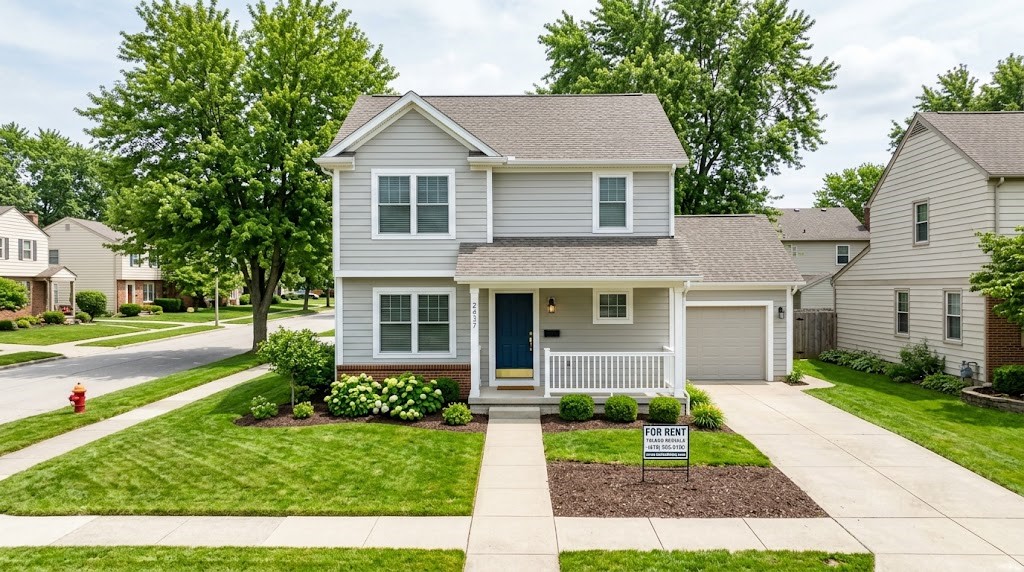
Same House, Two Strategies
An illustrative three-bedroom Toledo house. Property tax, base insurance and the mortgage are the same either way, so they're left out to show the difference. Every number is an assumption.
| Annual line item | Long-term rental | Short-term rental (managed) |
|---|---|---|
| Gross income | $15,000 ($1,250 a month) | $25,000 (AirDNA typical) |
| Vacancy | −$750 | Already in the revenue figure |
| Management | −$1,425 (10% of collected rent) | −$5,000 (20% of bookings) |
| Platform fees | — | −$750 (about 3%) |
| Cleaning and laundry | — | −$6,000 (about 75 turnovers) |
| Utilities, internet, streaming | −$1,072 (water only, owner-paid in Toledo) | −$3,600 (all utilities) |
| Supplies and restocking | — | −$1,200 |
| Furniture and decor (about $15,000 over 5 years) | — | −$3,000 |
| Extra insurance and permit | — | −$650 |
| Repairs and wear | −$1,200 | −$1,500 |
| Leasing fees (spread over a typical tenancy) | −$400 | — |
| Net before taxes, insurance and mortgage | About $10,150 | About $3,300 |
Self-manage the short-term rental and it climbs to about $8,300, but now you're running a small hospitality business: messages, scheduling cleaners, restocking, reviews and the 45-minute local-contact rule. With these assumptions, a managed Toledo short-term rental needs about $34,000 a year in bookings just to match the long-term rental, roughly a third more than AirDNA's typical Toledo listing. For the long-term side of the math, see the cost of owning a rental property in Toledo.
Where a Short-Term or Mid-Term Rental Can Work in Toledo
- Near the big hospitals. Traveling nurses, residents and patients' families need furnished housing near ProMedica Toledo Hospital, Mercy Health St. Vincent and the University of Toledo Medical Center. Many of those stays run a month or more, which makes them mid-term rentals.
- Walking distance to downtown, the Warehouse District or the riverfront, where event weekends, concerts and games bring visitors.
- Near the University of Toledo for graduation, move-in and football weekends.
- Unique properties such as historic Old West End homes or houses with water access, which can command higher rates than a standard three-bedroom.
Mid-term rentals (furnished stays of 30 days or more) are worth a close look. They need furniture but far fewer turnovers, and stays of 30 days or longer generally fall outside lodging taxes. Confirm how the city's short-term rental definitions and the county's lodging tax treat your planned stay lengths before you rely on that.
When to Skip the Airbnb Plan
- The house is in a neighborhood guests have no reason to visit.
- You need the property to cover a mortgage from month one; booking income is seasonal and uneven.
- You can't commit to a reliable cleaner and a local contact who answers at 2 a.m.
- The numbers only work at occupancy rates above what the data shows for comparable listings.
- The house would be a strong Section 8 rental, which in Toledo often pays at or above market rent with a steady payment source.
Run the STR vs Long-Term Numbers on a Real House
Austin can pull long-term rent comps and short-term booking data for a specific Toledo property, so you can see which strategy actually wins before you buy furniture.
Ask Austin to Compare BothNo pressure. No obligation.
FAQ
Are short-term rentals legal in Toledo, Ohio?
Yes, with a permit. Every Toledo short-term rental needs a $50 annual permit for each unit, proof of $1 million in general liability insurance, required life safety equipment, a 24/7 local contact, and an occupancy limit of two guests per bedroom plus two. The permit number must appear in your listings.
How much does an Airbnb make in Toledo, Ohio?
Estimates vary by source. AirDNA reported typical annual revenue of about $25,200 per listing in the 12 months to August 2026, with roughly 51% occupancy and a $120 average daily rate. Other trackers report lower occupancy and revenue. Results depend heavily on location, size and how well the listing is run.
Do I have to pay lodging tax on a Toledo Airbnb?
Lucas County charges a lodging tax on transient guests, administered by the county's Office of Management and Budget with monthly returns. Ohio's state sales tax on lodging generally applies only to places with five or more rooms. Confirm the current county rate and whether your booking platform collects and remits it.
What happens if I run a short-term rental in Toledo without a permit?
The city treats operating or advertising without a permit as a public safety hazard. Penalties are $100 per week up to $500, and the city can issue orders to stop operating.
Is a short-term rental or long-term rental better in Toledo?
For most Toledo houses, a long-term rental nets more after expenses and takes far less work. Short-term or mid-term rentals can win near major hospitals, downtown and the university, or with unique properties, but only if the bookings clearly beat long-term rent after cleaning, furniture, utilities and management.
Sources
- City of Toledo: Short-Term Rental Permit
- Toledo Municipal Code 702.03: Short-term rental operating permit
- Lucas County: Hotel/Motel Occupancy Tax
- Ohio Legislative Service Commission: lodging taxes and the five-room hotel definition
- AirDNA: Toledo, Ohio short-term rental data
- AirROI: Toledo, Ohio Airbnb market data
- Rabbu: Toledo, OH Airbnb market data


